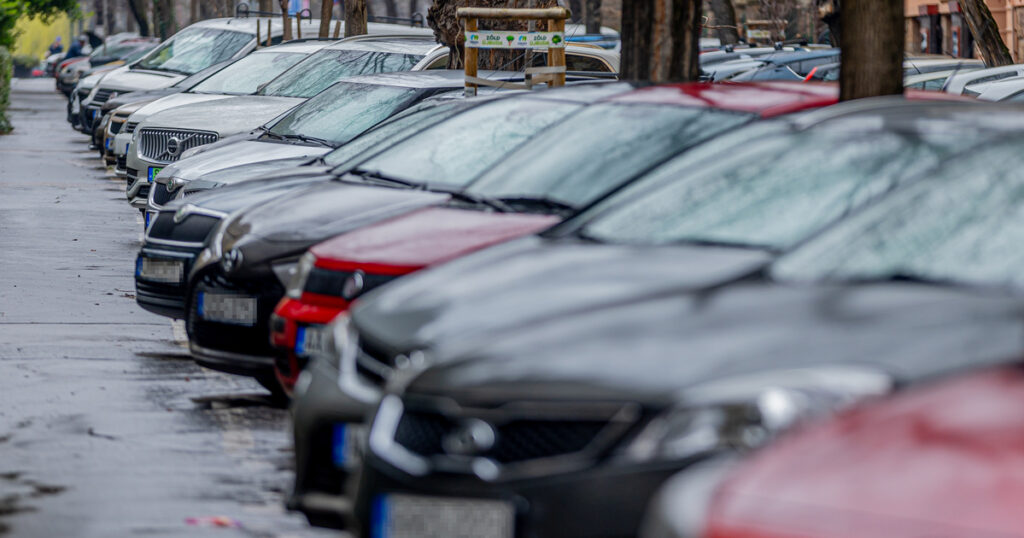
On October 1, five Budapest mayors stood together in the street to hold Gergely Karácsony to account over the planned overhaul of the parking system. Among them was Péter Niedermüller, Mayor of Erzsébetváros. According to the district leaders, centralization would deprive local governments of part of their revenue and room for maneuver.
The agreement between the City of Budapest and the government would steer parking money in a different direction. According to Index's October 8 article, the operation of parking spaces could move from the districts to the Budapest City Government, and the revenue would be set aside in a Budapest road fund, used to renovate city and district roads.
## Erzsébetváros is among the better performers
A central question of the debate is how much it costs to run the parking system and how much of the revenue is left. Ambrus Kiss, Director General of the Mayor of Budapest's Office, compared district data from 2023 to 2026.
The analysis reported by Index showed an average cost ratio of 65.5 percent. This means that, on average, the districts accounted for nearly two-thirds of their parking revenue as operating costs.
In Erzsébetváros, this rate was 44.9 percent. Only Terézváros had a lower rate, at 42.5 percent. District I ranked third with 52 percent. At the other extreme was Zugló, where expenditures exceeded revenues based on a cost ratio of 100.4 percent.
The data on a per-parking-space basis also painted a positive picture of the inner-city districts. According to Ambrus Kiss’s analysis, Districts VII, VIII, and IX achieved outstanding results. The director general attributed this to higher utilization rates and increased revenue.
## The debate is not about small change
Index used the example of Józsefváros to illustrate what these amounts mean in a district budget. In 2025, District VIII had nearly 3 billion forints in parking revenue, about half of which was consumed by operating costs.
Costs include maintaining the parking spaces, staff wages, the software on parking wardens' devices, maintaining the machines and collecting penalty fees. The fees paid on mobile parking came to 150–200 million forints a year in Józsefváros, and the reminder letters cost 30–40 million forints.
The Józsefváros municipal government told Index that the 1.5 billion forints in lost parking revenue would account for 25–30 percent of its discretionary budget. This explains why district leaders view the issue as one of the major factors in their financial management.
## Two different arguments collide
According to Gergely Karácsony, a centralized system could be more efficient, and drivers would know that the money they pay for parking goes on road renovation. Dávid Vitézy, Minister of Transport and Investment, claimed that every district spends more than half of its parking revenue on running the system.
The mayors, on the other hand, object to the loss of district revenues and decision-making authority. In the case of Erzsébetváros, the debate takes on particular significance because the 44.9 percent cost ratio cited in the analysis is well below the Budapest average of 65.5 percent.
Source: Index