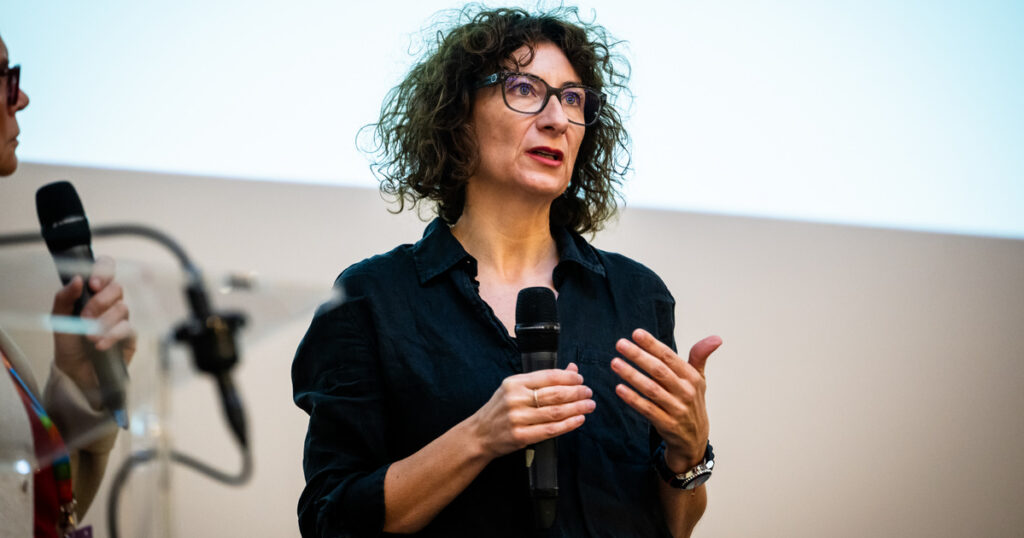
Conference participants were able to submit questions in advance to Szilvia Gyurkó, State Secretary for Children’s Rights and Child Protection. The day-to-day challenges faced by professionals in the field quickly highlighted the system’s most serious shortcomings: there are too few foster parents, not enough specialized facilities, and in many parts of the country, there are no child psychiatrists.
SOS Children's Villages established the Day for Children in State Care five years ago. Index published a report on this year's conference on Wednesday, October 7.
## Eight counties without specialists
According to one of the most alarming statistics, there are no child psychiatrists at all in eight counties. At the same time, the number of children receiving medication has increased significantly.
Szilvia Gyurkó spoke about overmedication and suggested that in some cases medication may be a symptomatic or convenience solution rather than real therapy. She sees the way forward in early support for university students and in developing telemedicine and IT systems, which would allow medication treatment to be monitored more continuously, even remotely.
An initial request was made for a 9.5 billion forint crisis intervention fund to provide care for children with special needs. According to the state secretary, disbursement of the funds has already begun. Part of the funds will be used to launch new residential care services and pilot programs.
## A free bed somewhere is not enough
There is no ideal number of children in the foster care system that fits every family, said Szilvia Gyurkó. A lot depends on what support foster parents get and what additional services they can access.
“We must break with the practice of placing a child wherever there happens to be space,” she said. According to the state secretary, placements must be found that respond to the child's individual needs.
A legislative amendment is being planned to streamline eligibility assessments. The proposals could be submitted to Parliament before the end of this year. The goal is to reduce administrative burdens, enable faster evaluation of individual cases, and facilitate transitions between foster care networks.
## The problems reach basic services
At the conference, participants also discussed the consequences of the merger of family support and child welfare agencies. According to the participants, past poor or delayed decisions have also contributed to the shortage of professionals. One symptom of this is that infants remain in the hospital because there is nowhere to take them.
Szilvia Gyurkó does not consider the current system to be sustainable. The funding model currently under discussion would create a more flexible foster care network and crisis care system, with special support for children with special educational needs, dual needs, or other special needs.
Experts speaking at the conference argued in favor of more autonomous child protection processes, stronger primary care, and prevention. In their view, a significant portion of EU funds should be allocated to prevention programs.
Source: Index