
Single people are especially exposed. Two earners may give a young couple a better chance of making ends meet, but Győri considers renting a Budapest flat on one salary virtually impossible. Many young adults are left living with their parents, sharing with others or taking out a loan.
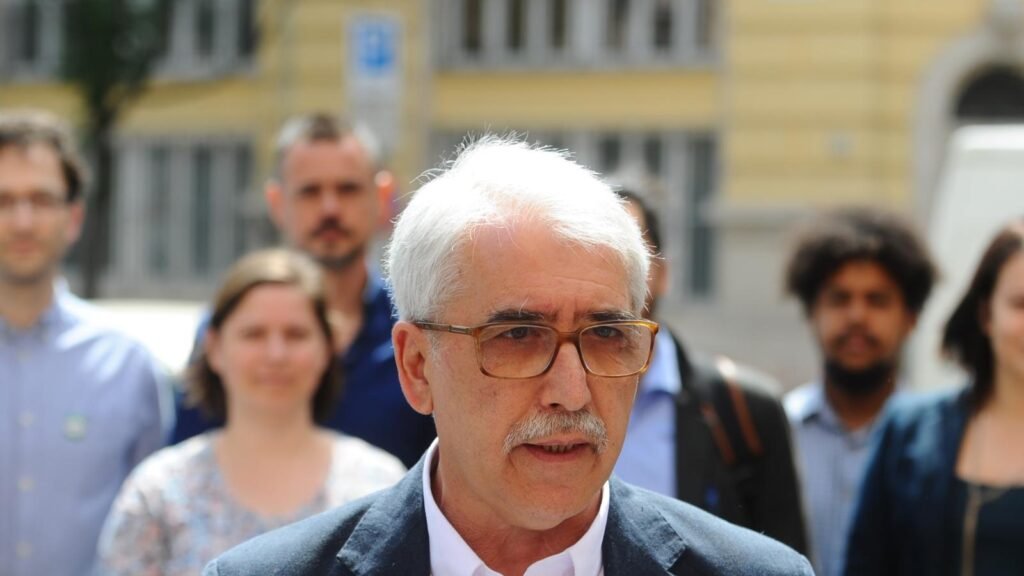
In an interview published by Népszava on 13 November, Győri examined how Budapest reached this point and what kind of intervention he believes is needed. The issue is particularly close to home in Erzsébetváros, Budapest’s District VII: he said the effects of tourism on housing are most visible in the city’s inner districts.
Tourists and students on the same market
Győri said global tourism returned to popular cities after Covid with even greater intensity than before the pandemic. Many visitors to Budapest look for short-term rentals, increasing demand for this type of accommodation. That leaves fewer properties available to long-term tenants and pushes rents upwards.
University students form another large group of renters. According to figures cited by Győri, between 25,000 and 27,000 international students study in Budapest, accounting for about one fifth of the capital’s higher education population. He put the nationwide figure at 50,000.
Budapest has 128,000 full-time students but only about 17,000 places in university halls of residence. Győri described this mismatch as a “dormitory gap”. The number of international students alone exceeds the capital’s entire university accommodation capacity, and most seek housing on the private rental market.
The planned Diákváros student quarter would add around 12,000 places. Győri said these were urgently needed. Private operators have meanwhile begun responding to demand by converting residential properties and former workers’ hostels into student accommodation. These rooms are generally cheaper than private flats, but their numbers remain too small to solve the wider shortage.
Shared flats and delayed independence
Housing costs do not cease to be a problem when students graduate. Those who shared a flat at university often continue doing so after entering the workforce because they cannot afford market rents on their own. Győri believes these arrangements can delay starting a family by several years.
He also urged caution over the common Hungarian expression “mamahotel”, used to describe adults continuing to live with their parents. Cultural habits are only part of the explanation, he argued. Young Hungarians did not traditionally leave home immediately after starting work, but the shortage of affordable housing may now be keeping more adults in the family home.
Others try to buy a flat with borrowed money. Győri described this as forced indebtedness: rather than paying a high rent, people would prefer to repay a mortgage, even if the loan shapes their finances for years. He said the government-backed babaváró, or “baby-expecting” loan, had also tempted many people down this route.
Housing pressure also reaches older generations. Drawing on field experience, Győri said that in some families younger relatives’ need for housing can push elderly parents out of their former homes. Residential care places in and around Budapest are extremely difficult to secure, and he believes the consequences are also reaching homeless shelters.
Regulation and targeted support
Győri cited European cities to show how different combinations of rent regulation and financial assistance can make housing more affordable. According to the figures he presented, 60 per cent of Vienna’s population lives under regulated rental conditions, while 10–15 per cent of tenants receive direct financial support. In Berlin, rent regulation covers 80–85 per cent of residents and about 15 per cent receive housing assistance. In Paris, only a quarter of the population lives in regulated housing, but 40 per cent receives support.
By contrast, Győri said only 3–4 per cent of Budapest residents live under regulated rental conditions, mainly in municipal housing. He put the share receiving financial housing assistance at 2–3 per cent and described Hungary’s private rental market as entirely unregulated.
He is not proposing that Budapest copy a single European model. In his view, part of the gap between wages and rents could be eased through support linked to income and household circumstances. He would combine this with comprehensive rental regulation, arguing that constructing new homes does not in itself produce a well-functioning rental housing system.
Győri strongly criticised the Hungarian government’s housing policy over the past 16 years. In his view, the household utility price cuts introduced under Prime Minister Viktor Orbán showed that policymakers were aware of the difficulties people faced in maintaining their homes, yet did not establish a standardised support system based on income and family housing circumstances. He described the political attention now being given to housing as a change, but warned against rushed measures.
Győri envisages reform as a gradual process lasting 10–15 years. One element would be a housing policy council bringing together institutional and private property owners, tenants’ groups, trade unions, civil society organisations and the state to negotiate rules on rents, rights and responsibilities.
Source: Népszava