
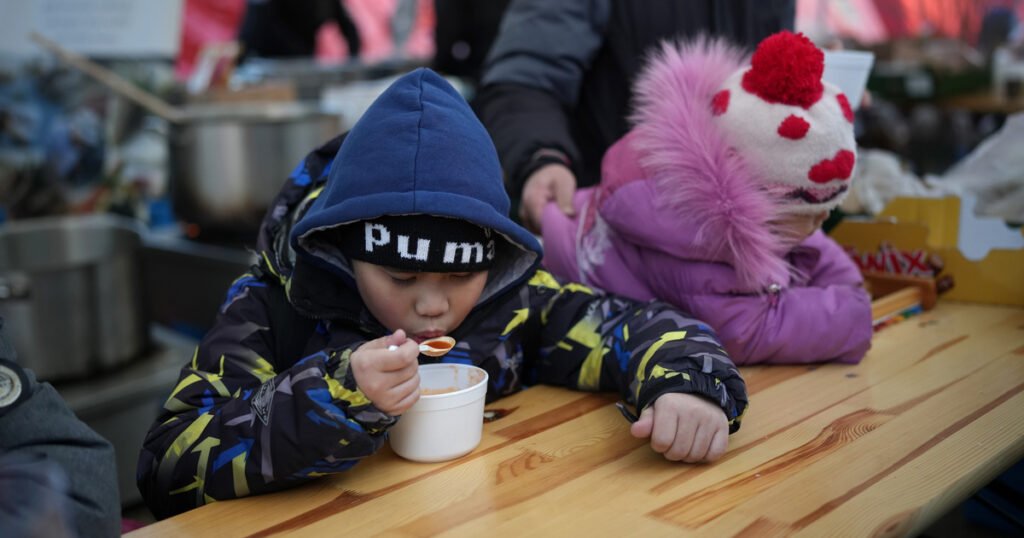
UNICEF Hungary told the Hungarian news website Index that many families across the country face this problem. Healthy development depends on the quality of a child’s diet as well as the number of calories it contains.
“Many families in Hungary also find it difficult to put healthy food on the table,” the organisation said in an Index article published on 5 November.
Deprivation can leave a lasting mark
Malnutrition is not always visible, nor does it only mean hunger. A limited diet can harm a child even when they eat several times a day. Nutritional deficiencies in the early years can restrict physical development and learning ability, with effects that may also diminish a child’s prospects later in life.
Joint estimates from the World Health Organization, UNICEF and the World Bank show that 150.2 million children under five experienced stunted growth in 2024. A further 42.8 million had a body weight that was too low for their height, including 12.2 million with severe wasting.
Diets can be especially poor among the youngest children. According to the 2026 global food report cited by Index, only 30.8 per cent of children aged 6–23 months had a minimally diverse diet.
Millions do not reach their fifth birthday
An estimate published by the United Nations in 2026 found that 4.9 million children died before the age of five in 2024. Of these, 2.3 million were newborn babies. The WHO says most of the deaths could have been prevented with established methods and adequate healthcare.
Premature birth and complications during delivery are among the leading dangers in the first weeks of life. Later, malaria, diarrhoeal diseases and pneumonia also claim many young lives. Survival depends on a combination of safe maternity and newborn care, adequate nutrition, clean water, vaccination and timely treatment.
There has been considerable progress over recent decades: the number of children dying before their fifth birthday has fallen by more than half since 2000. However, the pace of that decline has slowed by more than 60 per cent since 2015.
Several crises can hit the same children
The causes of childhood deprivation cannot be neatly separated. War can destroy healthcare facilities and water systems, interrupt education and deprive families of their income. Drought can push up food prices, floods can contaminate drinking water, and extreme heat can put additional strain on children’s bodies.
UNICEF’s child poverty report estimates that 417 million children in low- and middle-income countries experience severe deprivation in at least two basic areas. These include healthcare, education, housing, nutrition, drinking water and adequate sanitation. The report puts the number of children living in extreme income poverty at 412 million.
Climate change affects an even wider group. UNICEF’s 2026 climate risk report says 1.1 billion children face at least three overlapping climate hazards, such as heatwaves, drought or flooding. Weather-related hazards disrupted the education of more than 171 million students in 2025.
UNICEF describes spending on children’s nutrition as one of the most effective social investments. It calls for systems that give children access to safe, nutritious and affordable food from the earliest years of life, alongside reliable primary care, early nutritional support, predictable assistance for families, safe schools and services that remain available during crises.
Source: Index