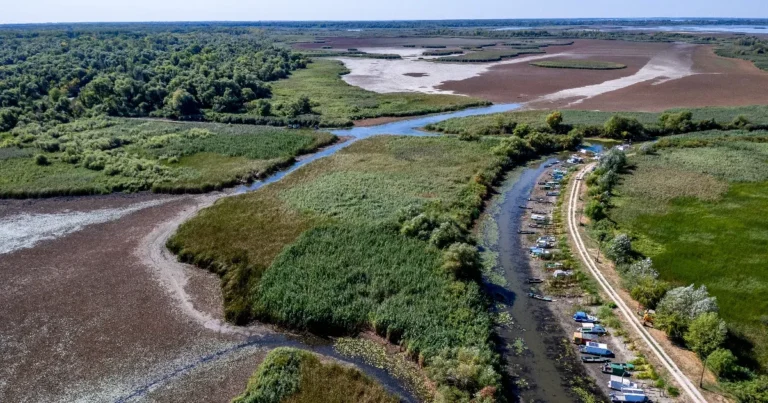
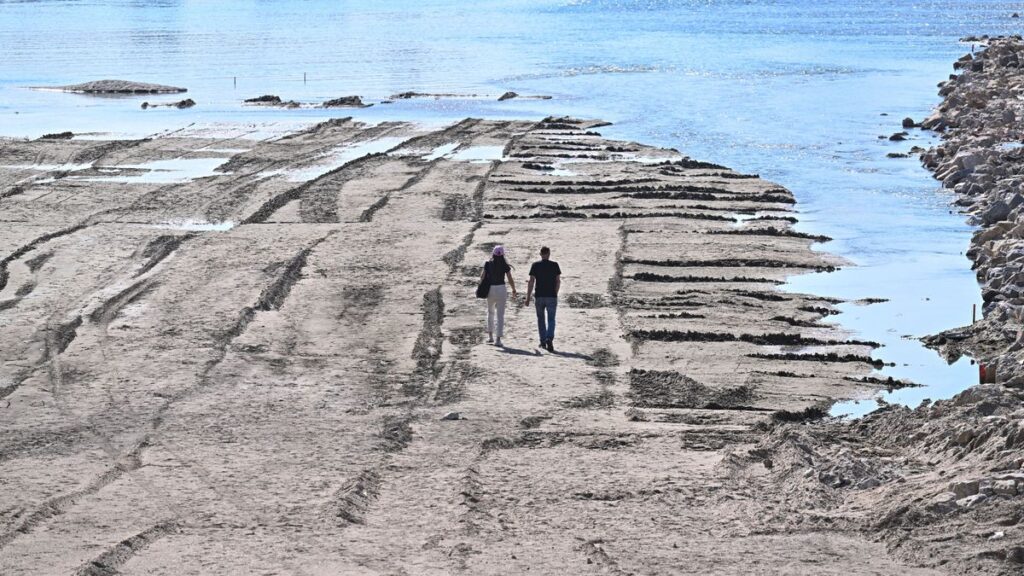
One and a half to two meters: that is how far the groundwater level at several measuring points in Békés County fell short of the 1991–2020 average this summer. At some places an even bigger difference was measured. The water shortage beneath the surface is less visible than parched soil, but it is part of the same process.
Világgazdaság reported on the World Meteorological Organization’s (WMO) report on global water resources. The document analyzed data from 2025 and revealed extremely low groundwater levels in Central and Eastern Europe.
Based on the report, climate researcher Diána Ürge-Vorsatz wrote that the situation looks most worrying in this region of the whole world, and within it in Hungary.
## Deeper than usual
Hungary's groundwater had already been below the 1991–2020 reference level, and in 2025 the situation got worse. The map of the General Directorate of Water Management shows both current measurements and earlier data.
The source does not provide measurement results for Erzsébetváros or Budapest. The data presented describe trends at the national level and in the Great Plain, so it is not possible to draw conclusions about the groundwater level in District VII based on them.
## The rain arrives differently
Hungary's annual precipitation fluctuated considerably between 1901 and 2025. The wettest year had two and a half times as much rain as the driest, while the long-term trend showed only a slight decrease. The roughly 627 millimeters typical at the start of the period fell to 596 millimeters by 2025.
It is not only the amount that has changed. The number of rainy days has fallen, while heavy downpours in a short time have become more frequent. More of their water runs off, so it does not necessarily replenish the depleted reserves, and it can also cause erosion, waterlogging and local damage.
Warming further increases evaporation and accelerates soil drying. According to the Hungarian Central Statistical Office’s (KSH) climate indicators, the average temperature in Hungary for the 1991–2020 period was 10.8 degrees Celsius. This level has been exceeded every year since 2012; by 2.16 degrees Celsius in 2024 and by 1 degree Celsius in 2025.
## Damage measured in hundreds of billions
The most severe effects of this year’s drought were felt in the agriculture of the Great Plain. According to data released by Magosz, the area reported as having suffered drought damage has already exceeded 1.5 million hectares, surpassing the 2022 figure by approximately 100,000 hectares. Frost damage was reported on an additional 65,000 hectares.
The Ministry of Agriculture estimates the losses in crop production at 600–800 billion forints. This amount is close to one percent of Hungary’s GDP. The Hungarian Central Statistical Office (KSH) has already reported a decline in economic performance: in the second quarter of 2026, the value added by agriculture was 12.4 percent lower than it had been a year earlier.
Source: Világgazdaság