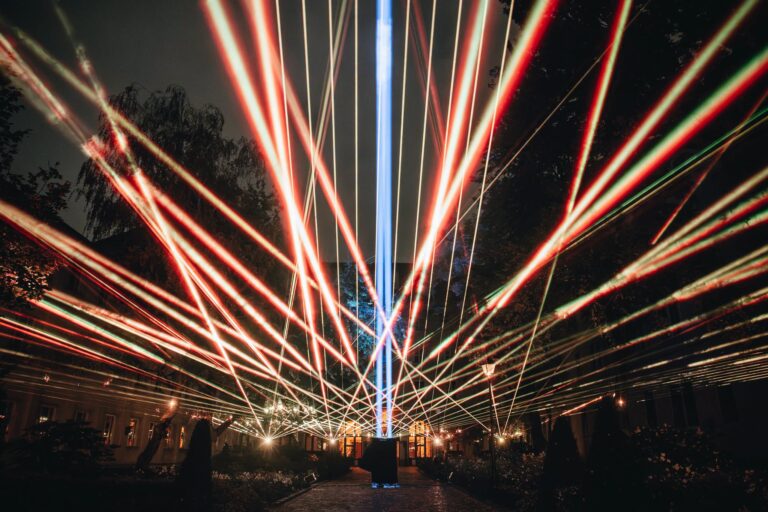
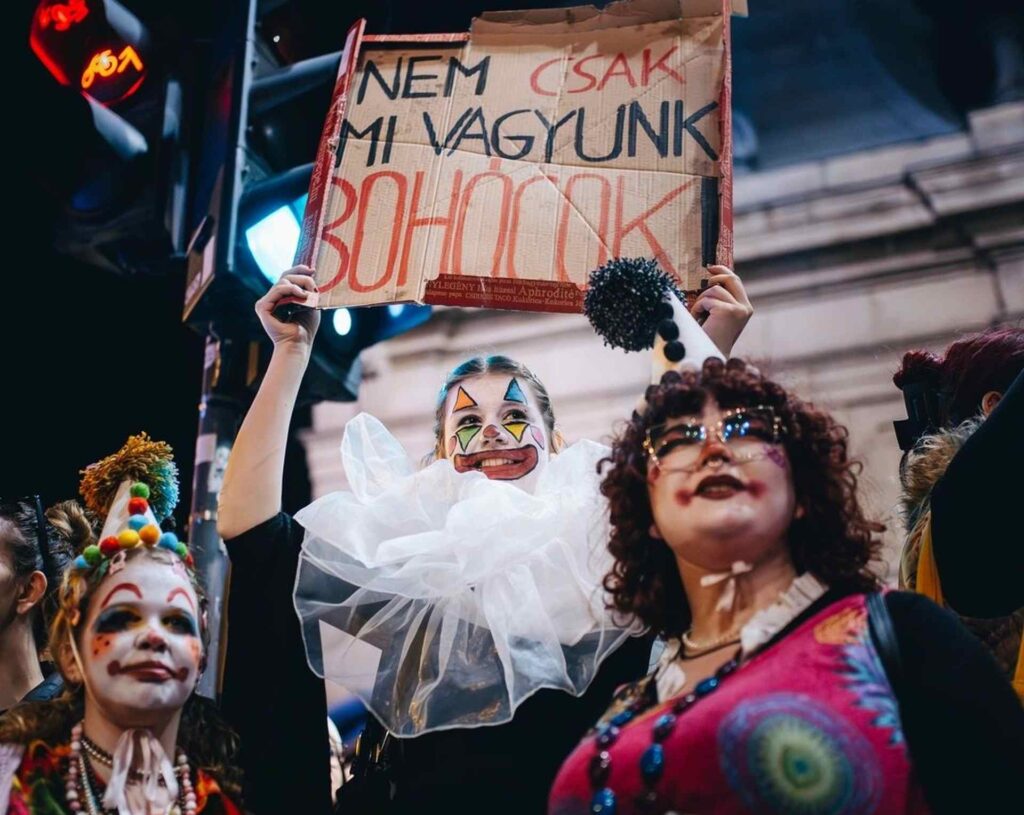
The image sets the tone for the exhibition. Politics and public life, war and grief, intimate family stories, sport and the natural world follow one another across the walls. A review published by Revizor on 2 November notes that darker subjects dominate, although lighter and more playful photographs periodically offer visitors some breathing space.
The scale of the selection is striking. A total of 258 photographers submitted 2,355 entries comprising 6,196 photographs in sixteen categories. The entries went through four rounds of judging by an international panel made up of Petr Mlch, Stephane Arnaud, Bácsi Róbert László, Adrian Evans and Szabó Bernadett. The exhibition was curated and arranged by Balog Rudolf Prize-winning photographer Bánkúti András.
War Seen in a Child’s Face
Vörös Szabolcs’s Swan in the Basement won first place in the single-image portrait category. The photograph shows a ballerina in a purple costume rehearsing in a basement in Kharkiv. Crumbling walls, old pipes and electrical equipment surround her. The image draws its force from the contrast between the dancer’s airy movement and a room marked by the reality of war.
Stiller Ákos’s Hiding from Drones, winner of the single-image Daily Life category, also takes viewers to Ukraine. The photograph shows siblings Anasztázia and Mihail emerging after a night in an underground shelter. Instead of ruined buildings or burnt-out vehicles, the horrors of war appear in the children’s faces and in the frightened girl holding on to her older brother.
The André Kertész Grand Prize went to Melegh Noémi Napsugár for Eighteen Years Is Eternity. The deeply personal photograph explores the absence left by her younger brother, whom she lost in 2024.
Nimród’s Story and Acceptance
The exhibition’s highest distinction, the MÚOSZ Grand Prize, was awarded to Nemeh Diana for her series Nimród. The photographs offer a close and intimate portrait of a thirteen-year-old autistic boy. Revizor’s review praises the series for its sensitivity and empathy: the images invite reflection on accepting difference while allowing viewers into Nimród’s personal world.
Nature photography brings a different rhythm to the exhibition. Kállai Márton placed second and third in the Nature and Science series category with Sumony Bird Observatory and Light Traps to Protect the Forest. Both projects focus attention on the protection of wildlife.
A pine marten takes centre stage in Daróczi Szabolcs’s The Forest’s Most Beautiful Killer. The elusive predator appears balancing on a thick tree trunk and leaping through the air. These photographs bring a touch of warmth and humour to a display filled with difficult human stories.
A Chronicle Assembled from Images
Through its award-winning photographs, the exhibition traces the public events, social changes and everyday moments that shaped 2025. The extensive selection rewards time and attention, while the accompanying captions explain the circumstances in which individual photographs were taken.
Visitors can also browse copies of Digitális Fotó Magazin, a Hungarian photography publication. The yearbook Az év fotói includes short biographies of the photographers, offering a glimpse of the people who stood behind the camera as familiar news events unfolded.
The 44th Hungarian Press Photo Exhibition is open in the upstairs galleries of Budapest’s Robert Capa Contemporary Photography Center until 15 November 2026.
https://www.youtube.com/watch?v=
Source: Revizor