Organised by MISZJE, the Hungarian association for authors’ copyright protection and rights management, the festival explores how history, language and memory shape individual lives.
Class divides and Central European lives
French philosopher and sociologist Didier Eribon draws on his own life in Visszatérés Reimsbe, examining social mobility, shame and identity. His latest book to appear in Hungarian, Egy munkásnő élete, öregsége és halála, approaches ageing and social vulnerability through the story of his mother. Eribon will speak to Fáber Ágoston, the Hungarian translator of both books, from 6 pm on 13 November.
The personal consequences of history also run through the work of several other guests. Slovak author Pavol Rankov will join interviewer Winkler Nóra from 6 pm on 12 November. Italian writer Federica Manzon won the prestigious Campiello Prize in 2024 for Alma, a novel connected to Trieste and Yugoslav history. Her conversation with Czakó Zsófia begins at 7.30 pm on 13 November.
In Zulejka kinyitja a szemét, Guzel Yakhina depicts the brutality of Stalinist collectivisation through the Siberian exile of a Tatar peasant woman. Her later works also consider how people can preserve their individuality under systems that strip them of the freedom to choose. Yakhina will speak to M. Nagy Miklós from 4.30 pm on 14 November.
When war changes the words
In the poetry of Ukrainian writer Ljuba Jakimcsuk, war alters language itself. Familiar words take on new meanings, while violence leaves its mark on sentences and poetic images. Born in Pervomaisk in the Donbas, Jakimcsuk reached an international audience in 2022 when she recited one of her poems as part of John Legend’s performance at the Grammy Awards. Her Hungarian translator, Vonnák Diána, will talk to her from 5 pm on 12 November.
Translator Tankó Timea approaches language from a different direction. Her work includes the German translation of Visky András’s novel Kitelepítés. From 5 pm on 13 November, she and fellow translator Wilhelm Droste will discuss how a book’s rhythm, cultural references and linguistic character can be recreated in another language.
The relationship between words and images is central to the work of the Ukrainian Art Studio Agrafka. In books by Romana Romanisin and Andrij Lesziv, illustration and typography do more than accompany the text: they carry meanings of their own. The pair will speak to Nagy László of MOME, Budapest’s University of Art and Design, from 7.30 pm on 12 November. Their exhibition Tágra nyílt szemmel will open at the Petőfi Irodalmi Múzeum at 8.30 pm and remain on view until 29 November. An illustration workshop will also be held, with advance registration required.
Science fiction and contemporary Polish drama
One of the festival’s strangest premises comes from the British science-fiction author known as qntm. The Hungarian edition of Antimemetikai Ügyosztály nem létezik was released on 5 November. Its unsettling idea is that certain pieces of information or creatures can prevent people from remembering them. How can a threat be identified if it is forgotten at the very moment of recognition? qntm will discuss the novel with Farkas Balázs from 3 pm on 14 November.
The final evening turns to contemporary Polish drama. Writer and dramaturg Malina Prześluga often tackles social taboos and uncomfortable questions through unusual perspectives and grotesque humour. She will speak to Pászt Patrícia from 6 pm on 14 November, followed at 8 pm by a rehearsed reading of her play Debil.
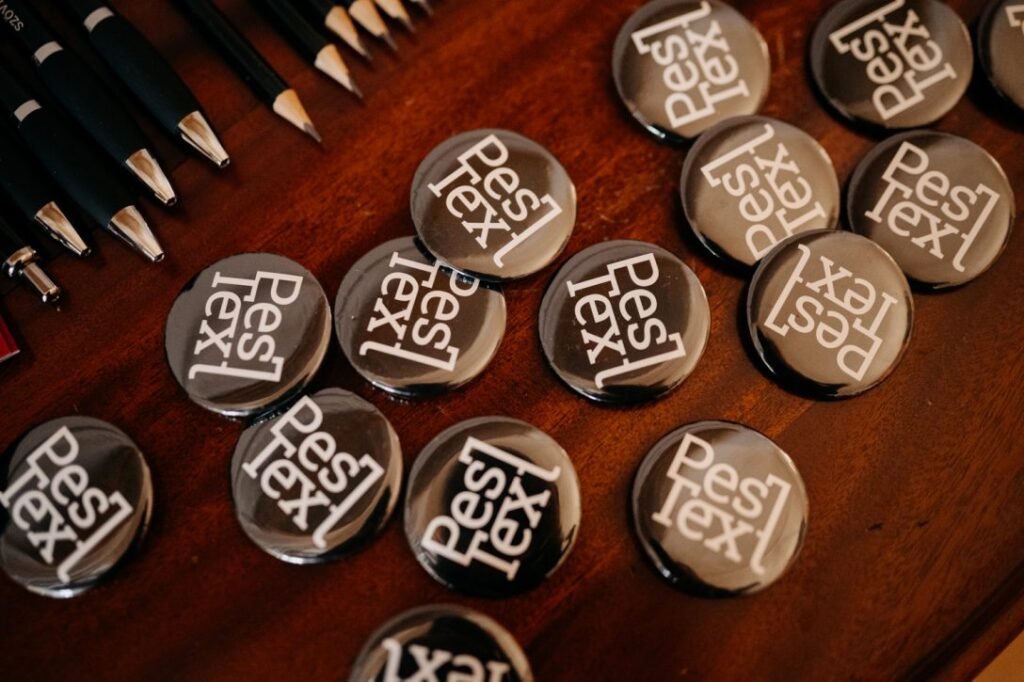
The play examines prejudice towards disabled people and apparently sympathetic behaviour that is, in reality, patronising. Directed by Hrisztov Toma, the performance features Georgita Máté Dezső, Podlovics Laura and Vizi Dávid. Pászt Patrícia produced the Hungarian translation. Audience members will also be able to pick up a free copy of PesText Zine containing the full text of the play.
On 12 and 13 November, PesText will take place at the Petőfi Irodalmi Múzeum, Károlyi utca 16. The programme on 14 November moves to Három Holló, Piarista köz 1. Admission to all events is free, although the illustration workshop requires advance registration. Hungarian interpreting will be provided for conversations held in other languages. Books by the invited authors will be available to buy at the venues, with signing sessions after the talks.
Source: Kultúra.hu