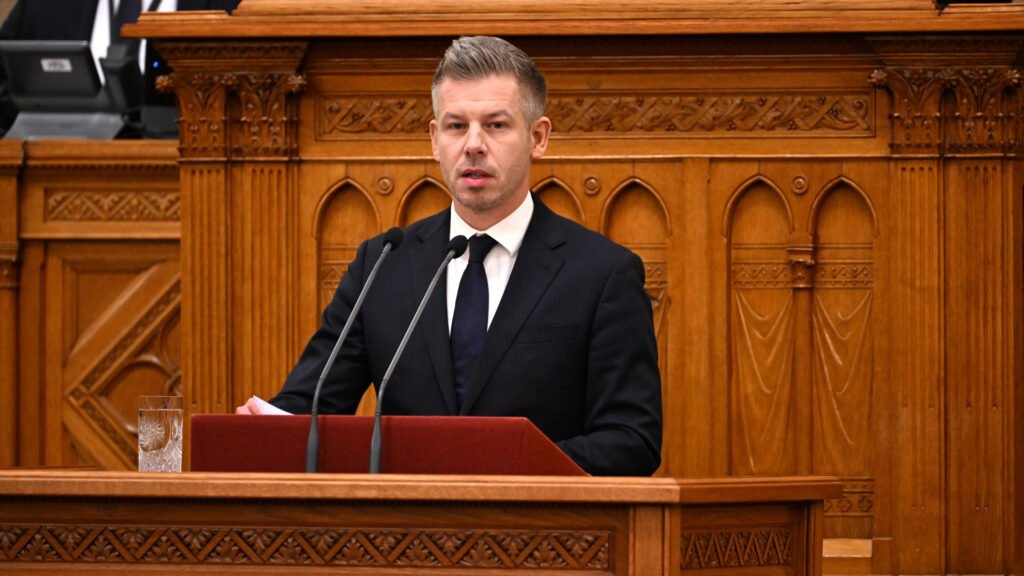
Prime Minister Péter Magyar described the publication of the documents as a historic step, Portfolio wrote in its political news roundup on 4 November. Opening the database, however, does not mean that every entry provides a complete or conclusively established account.
A registry card does not tell the whole story
The records include several well-known names. Documents covered by Portfolio refer to Constitutional Court judge András Patyi, Reformed pastor Kálmán Tarr, R-Go frontman Róbert Szikora and Károly Szita, the mayor of Kaposvár.
A so-called “No. 6 card” states that Kálmán Tarr was registered as a secret contact in 1984 under the codename “Kovács Kálmán”. His son, government minister Zoltán Tarr, said his father had not acted as an agent. He cited an official vetting decision issued in 2002 and said the family had long been aware of the case.
Róbert Szikora appears under the codename “NANU-NANU”, with a recruitment date in February 1984. The singer firmly denied ever reporting on anyone. He said the authorities regularly questioned him before concerts and foreign performances, but maintained that he had never written reports and had not actually been recruited.
A No. 6 card is one element of the security service registry. Its existence alone does not establish that the person concerned wrote reports or actively cooperated with the state security apparatus. Further records and historical research are needed to reconstruct what happened in individual cases.
The Hungarian Catholic Bishops’ Conference apologised to victims on behalf of church figures who had genuinely cooperated with the communist state. At the same time, it warned against hasty judgements. The bishops said the names in the documents represented very different personal histories, many involving coercion or blackmail, while responsibility for the dictatorship rested with those who operated and sustained it.
Pensions and tax measures before parliament
While the release of the security files dominated the day’s political news, legislative work continued in the Hungarian parliament. MPs discussed increases for people receiving low pensions, changes to taxation and the abolition of the mandatory contribution paid to chambers of commerce.
Parliament also considered an agreement intended to support civil nuclear energy cooperation between Hungary and the United States. The governing Tisza Party described the agreement as serving the country’s interests.
Balázs Bús to remain in detention until 25 December
A second-instance panel of the Kecskeméti Törvényszék upheld the lower court’s decision to extend the pre-trial detention of Balázs Bús. The former Fidesz mayor of Óbuda, Budapest’s District III, and former vice-president of the Nemzeti Kulturális Alap, Hungary’s National Cultural Fund, will therefore remain in detention until 25 December under the final ruling.
According to the reasonable suspicion outlined in the court communication, the fund’s decision-making body may have exceeded its authority from December 2024 and may have breached statutory rules when deciding on 1,079 funding applications. The authorities allege that these decisions caused financial losses exceeding HUF 17 billion.
The criminal proceedings concern suspected mismanagement. The ruling extends a coercive measure and does not determine Bús’s criminal liability.
Source: Portfolio