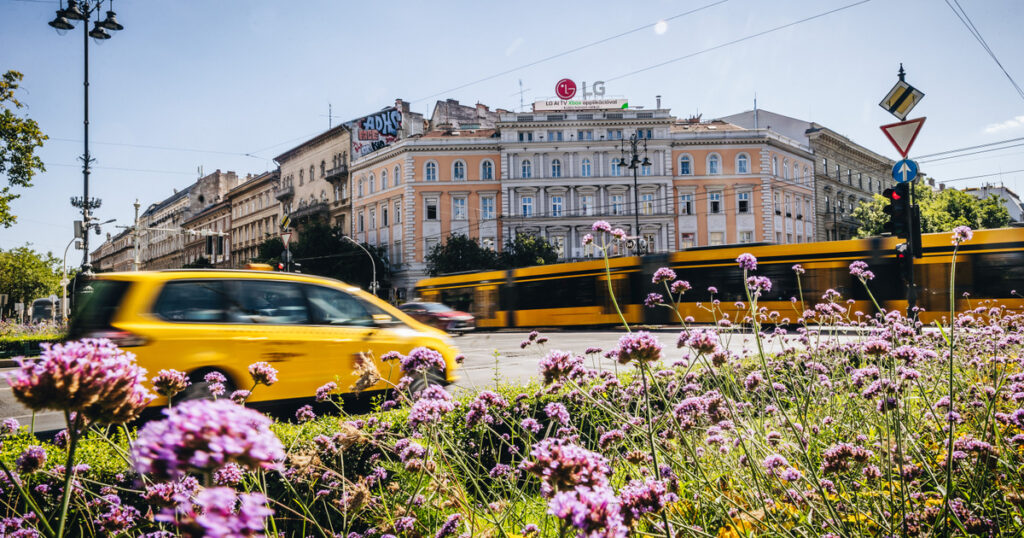
It would be hard to imagine Oktogon today without Andrássy út, the Grand Boulevard and the boulevard trams. Yet when it was decided in 1870 to create a square, this part of Terézváros was still an industrial area. Factories and workshops operated here, and the street names of the time included Vas, Szeg, Kőműves and Gyár Streets.
The change was sparked by the Paris-style boulevard, which was simply called “Sugár út” at the time of its design. Today we know it as Andrássy út, and Oktogon is virtually inseparable from it.
## The square was drawn on the site of a pit
No rows of houses had to be demolished at the site of the future square. A large pit stretched across the area, which was used primarily for storing lime and, earlier, for growing vegetables. It was filled in in 1872.
The octagonal square was designed by Antal Szkalnitzky and Henrik Koch. Four sides were left open for the roads, with buildings planned on the other four. The geometric shape also gave the square its name: the word oktogon means octagon.
Private investors were also brought in to help build the palaces. As an incentive, they were offered a full tax exemption for 15 years, followed by a partial tax exemption for another 15 years. However, the economic crisis that began in 1873 halted the momentum, and by 1876 the investors had pulled out. By that time, the four corner buildings had already been completed.
The palaces, completed in 1875, had apartments on their upper floors, with shops on the ground floor. The range of businesses at the time clearly illustrates how quickly the neighborhood became urbanized: there was a pastry shop, a sewing machine and bicycle store, a domestic help agency, and several coffeehouses.
## Trams, underground and long-distance buses
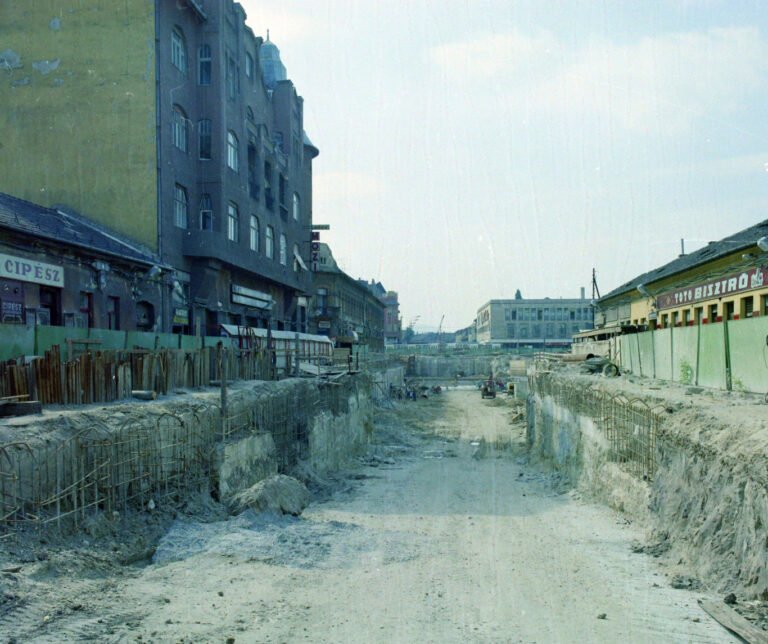
It was transport that really made Oktogon important. Budapest's first, experimental tram line, launched at the end of November 1887, ran between Nyugati Railway Station and Király Street, passing through what was then called Nyolcszög tér.
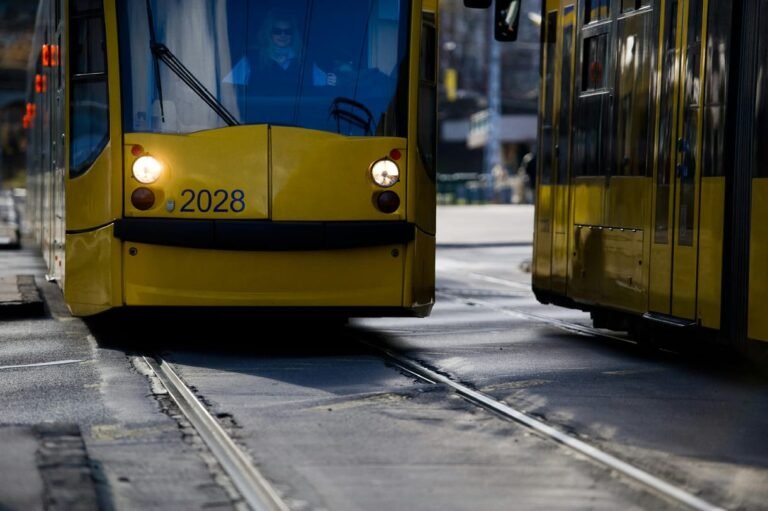
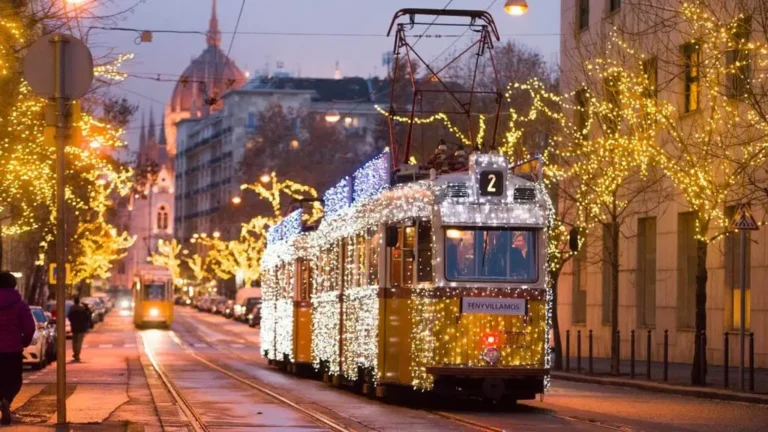
The Millennium Underground opened in May 1896. In the same year, on August 31, the Grand Boulevard was also completed. The boulevard tram network developed gradually and reached its current form, described in the source, by 1959.
Oktogon was also once the starting point for longer journeys out of Budapest. Between 1927 and 1949 long-distance buses departed from here; their terminus was later moved to Erzsébet tér.
Meanwhile the square's name changed with the city. Nyolcszög tér became Oktogon in 1920 and was renamed Mussolini tér in 1936. In 1945 it was called Oktogon again, but from 1950 until the fall of communism it appeared on maps as November 7 tér. It got its old name back in 1990.
## Coffee houses and big-city encounters
The transport hub soon became a social hub. One of the best-known places was the Abbázia, which closed for good in 1992. The Menton opened in 1905 and between the two world wars was one of the main meeting places of the Jewish intelligentsia. Its building housed a cabaret between 1945 and 1950, after which an IBUSZ travel office took its place.
The café, which operated first under the name Nicoletti and later as Kovács, was frequented mainly by artists. It was unable to survive long under either name, but in 1934, the Savoy—one of the era’s well-known nightclubs—opened in its place. After World War II, it became a café again, later transformed into a self-service restaurant, and today it houses a branch of an American fast-food chain.
Oktogon's open, busy location also made room for large mass gatherings. Funeral and ceremonial processions, organized and spontaneous demonstrations, August 20 processions, May Day parades and athletes' parades have all passed through it.
Source: We Love Budapest