The planned corridor would link Prague, Brno, Bratislava, Budapest and Győr. Czech Prime Minister Andrej Babiš said it could become the backbone of a future high-speed network connecting the four Visegrád countries.
A joint bid for EU funding
The four Visegrád countries would coordinate their efforts to obtain support from the EU’s Connecting Europe Facility, known as the CEF. The memorandum also looks ahead to the EU budget period from 2028 to 2034, with Central European rail projects to be presented as an interconnected regional programme rather than as isolated national schemes.
The agreement also covers existing international trains. The two countries want shorter journey times and more frequent services on the Prague–Bratislava–Budapest route, alongside better interoperability between their different national railway systems. Connections towards Győr and other destinations in Central and Eastern Europe would also be expanded. Improvements to Czech links towards Germany and Northern Europe were discussed as well.
Bednárik said a competitive Central European railway network would require countries to prepare major projects together and coordinate their search for European funding.
Longer freight trains and a more digital railway
Rail freight is another part of the agreement. The two countries would support international freight corridors, combined transport and wider use of digital systems. Their plans also include creating the conditions required to operate 740-metre freight trains.
The Czech Republic and Hungary would exchange experience on introducing the European Rail Traffic Management System, or ERTMS. The system is designed to make cross-border operation between different national rail networks easier.
Road tolls and motorways are also on the agenda
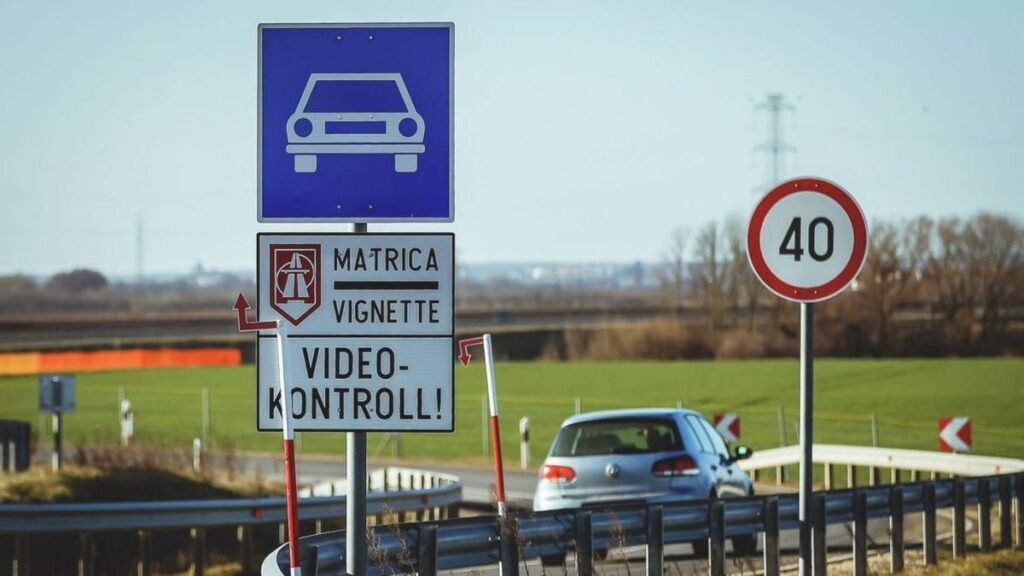
The road transport section of the memorandum covers intelligent transport systems, data exchange, and rules for connected and self-driving vehicles. The countries would also consult on alternative-fuel infrastructure, coordination between electronic toll systems and time-based road charges.
The financing options discussed include public–private partnerships, or PPPs. Hungary and the Czech Republic would share experience of these arrangements, cross-border investment and infrastructure serving military mobility. In this context, military mobility refers to transport links capable of carrying military equipment and units as well as civilian traffic.
Alongside the bilateral agreement, Világgazdaság reported on proposed changes to the financing of Hungary’s motorway concessions. According to the newspaper, the draft 2027 budget allocates HUF 319.87 billion for availability payments on expressways. This is HUF 246.13 billion less than this year’s amended allocation, with most of the reduction affecting payments intended for MKIF Magyar Koncessziós Infrastruktúra Fejlesztő Zrt., Hungary’s motorway concession company.
The newspaper also stated that the 35-year motorway concession contract with MKIF will end on 1 April. Payments to the foreign-owned operators of the M5 and M6 motorways remain in the draft 2027 budget.
Source: Világgazdaság