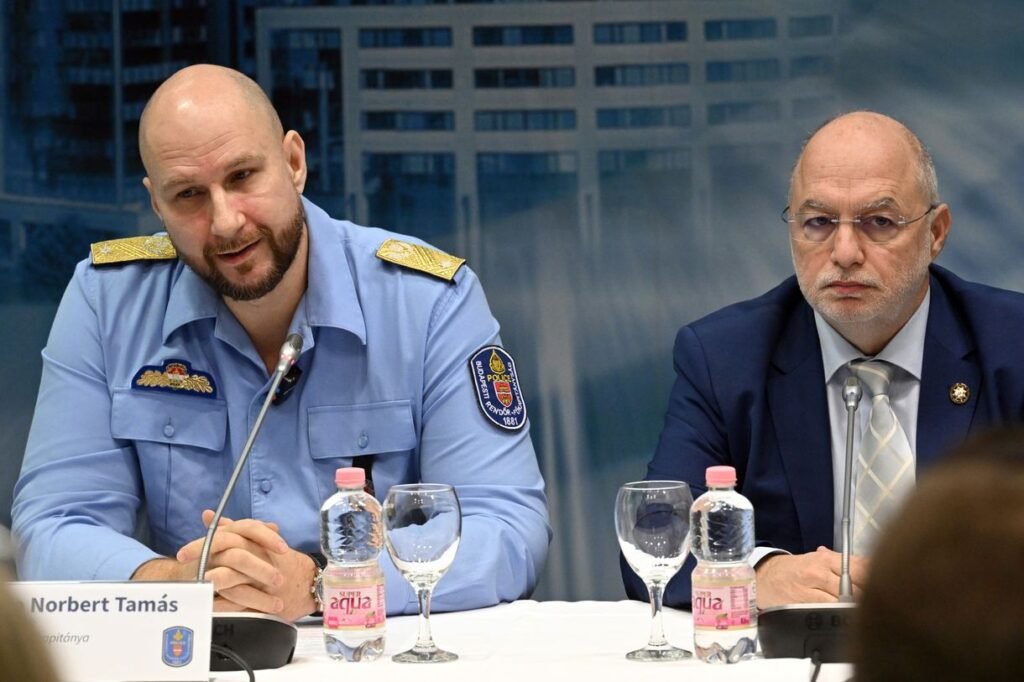
Baricska presented the latest figures on Friday, 20 November. HVG, reporting from an MTI news agency account, wrote that around 6,000 police officers and administrative staff currently work at the Budapest Police Headquarters, known by its Hungarian abbreviation BRFK. The force nevertheless has a shortfall of nearly 2,000 officers.
The decline in staffing has stopped
There are 1,100 unfilled positions in public-order policing and around 500 in criminal investigation. Baricska said staffing levels had stabilised over the past six months. He expressed hope that government measures promised to improve officers’ pay and working conditions would encourage more people to join the force.
Some officers have already been reassigned to street duty. After the Hungarian Defence Forces took over the protection of diplomatic buildings, 70 police officers became available for other assignments, including patrol work. The Rapid Response and Special Police Service and volunteer civil guards are also assisting, while BRFK has coordinated its work with municipal law-enforcement units.
A legal change could free up several thousand more working hours, the police chief said. People apprehended in Budapest can now serve their sentences in the capital instead of being transported to a prison near their registered home address.
Enhanced checks at 28 locations
Police identified 96 locations considered critical to public safety after consultations with the city and district municipalities, as well as reports from residents. Enhanced checks were conducted at these sites in July. The operations then continued at 19 locations and later at 34; they are now under way at 28 sites.
Figures published by HVG link around 3,000 police actions to the operations. They included more than 600 arrests or transfers to police stations and another 400 safety interventions. Police also opened more than 2,400 criminal proceedings.
More than 1,000 of those cases involved bodily harm or disorderly conduct, while 948 were linked to suspected drug offences. Proceedings are under way against 98 people suspected of selling drugs near locations designated as public-safety hotspots.
The issue has a direct bearing on Erzsébetváros, Budapest’s District VII. HVG also referred to drug-related problems in Outer Erzsébetváros, where police assistance is regularly requested. Baricska said public-space problems could not be addressed through policing alone, and that the force was consulting representatives of the social-care and healthcare sectors.
Dispatchers can track civil guard patrols
Pál Kardos, president of the Budapest Civil Guard Association, stressed that volunteer civil guards were not taking over police duties. Their role was to support the work of the force.
Budapest operates a system that allows staff at the police dispatch centre to track where civil guards are on duty across the city. It also shows whether those serving have relevant qualifications, such as medical training.
Civil guards from other Hungarian towns can be called in to help their Budapest colleagues when needed. Police also plan to increase mobile speed checks. According to Baricska, speeding is less common near fixed cameras but remains frequent on roads without them.
Source: HVG