For Hungary, this is more than an institutional contest. The final deal will help determine how much funding is available between 2028 and 2034 for cohesion projects, agriculture and rural development. A late agreement could also delay the launch of new programmes and the first payments.
A deal with many hurdles
The European Commission begins the process by presenting a proposal for the EU’s Multiannual Financial Framework. National leaders must then reach a unanimous decision in the European Council, meaning that a single member state can block the agreement. The European Parliament must also give its consent.
The revenue rules face another stage: they have to be ratified by national parliaments. Individual areas such as cohesion funding and agricultural policy also require separate legislation agreed by the Council and the European Parliament.
The Commission’s proposal, presented in the summer of 2025, envisages a budget of almost €2,000 billion at current prices for 2028–2034. According to calculations cited from the European Court of Auditors, this would be 59 per cent larger than the €1,200 billion framework for 2021–2027. Average annual spending would amount to 1.26 per cent of the EU’s gross national income, compared with 1.13 per cent in the current period.
The Commission also wants to reshape the revenue side of the budget. Contributions linked to member states’ national income would account for a smaller share, while several new revenue streams would be introduced. These would include proceeds from carbon emission allowances, levies on carbon-intensive imports, contributions linked to uncollected electronic waste, part of the excise duty on tobacco products and a new payment from large companies. The Commission estimates that these measures would raise around €66 billion a year.
The European Parliament has proposed adding taxes on cryptoasset trading and online gambling.
Member states disagree over where to cut
The negotiating landscape described by Portfolio is shaped by three competing positions.
A group of net contributors led by Germany — often labelled the “frugal” states — includes the Netherlands, Sweden, Finland, Denmark and Austria. These countries want a smaller overall budget and lower national contributions while retaining much of the funding intended for competitiveness reforms.
Opposing them is the “Friends of Cohesion” group, led by Italy and Romania and joined by Hungary and another 13 or 14 countries. These governments argue that agricultural and cohesion funding should not be reduced further. They also want member states to retain a role in distributing the money similar to the one they have today.
The two camps are closer on one point: many governments would rather make savings in the running costs of EU institutions and centrally managed programmes. Their disagreement concerns where the money saved should go and how large the common budget should be.
Repayment of the joint debt taken on during the coronavirus pandemic is another source of tension. Servicing the Next Generation EU debt is estimated to cost €168 billion in the next budget cycle. The Friends of Cohesion would postpone part of the repayment. Germany and the Netherlands reject that option, arguing that it would retrospectively alter the timetable agreed in 2020 and could raise constitutional problems in some cases.
The European Parliament, meanwhile, is calling for a larger budget. Its own calculation envisages a €2,010 billion framework at current prices. Parliament argues that higher spending on defence and competitiveness should not be financed by reducing agricultural or cohesion funding. It would also place repayment of the joint debt outside the main EU budget.
Delays could hold back payments for years
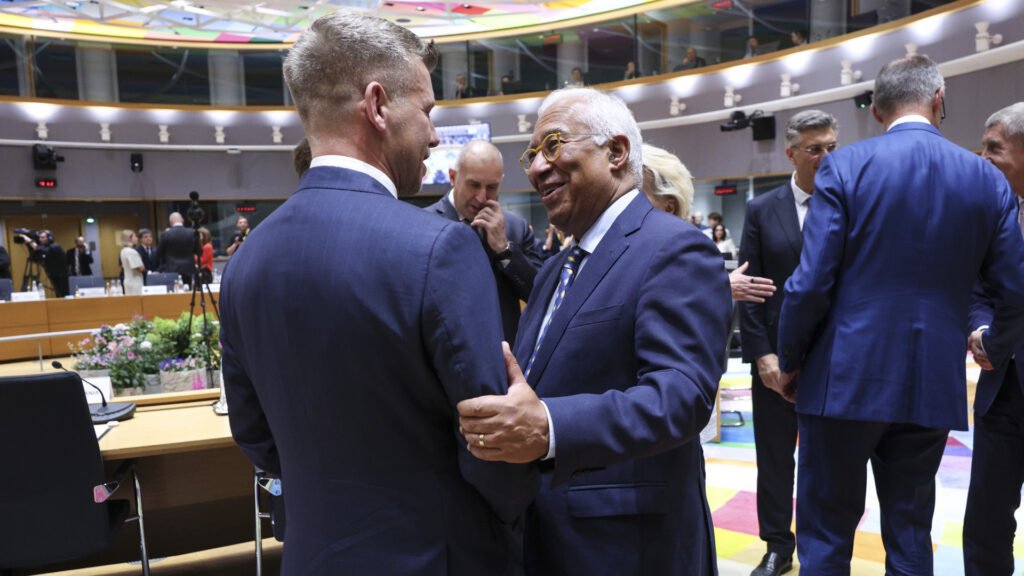
The formal deadline for an agreement is the end of 2027, but António Costa, president of the European Council, has called for the negotiations to be completed by the end of 2026. There is a political reason for the tighter timetable: France is due to hold a presidential election in 2027, while parliamentary elections are scheduled in Poland and Italy. Shifting political majorities could make a unanimous deal even harder.
Agreement on the headline budget would only be the first stage. Detailed legislation would still be needed for agricultural policy, cohesion policy and rural development. Member states would then have to negotiate their national and regional plans with the European Commission.
The current budget cycle shows how lengthy that process can be. EU leaders agreed the main figures for the 2021–2027 framework in the summer of 2020, but the Commission did not approve Hungary’s cohesion programmes until December 2022.
If no new budget has been adopted by the end of 2027, Portfolio writes that the 2027 financial framework would remain in force. Even if a late compromise were reached, detailed rules and actual payments would almost certainly be delayed — just as more than two years passed between agreement on the current budget’s headline figures and approval of Hungary’s programmes.
Source: Portfolio